✍️ By Debbie Balfour | Surrey City News | May 1, 2026

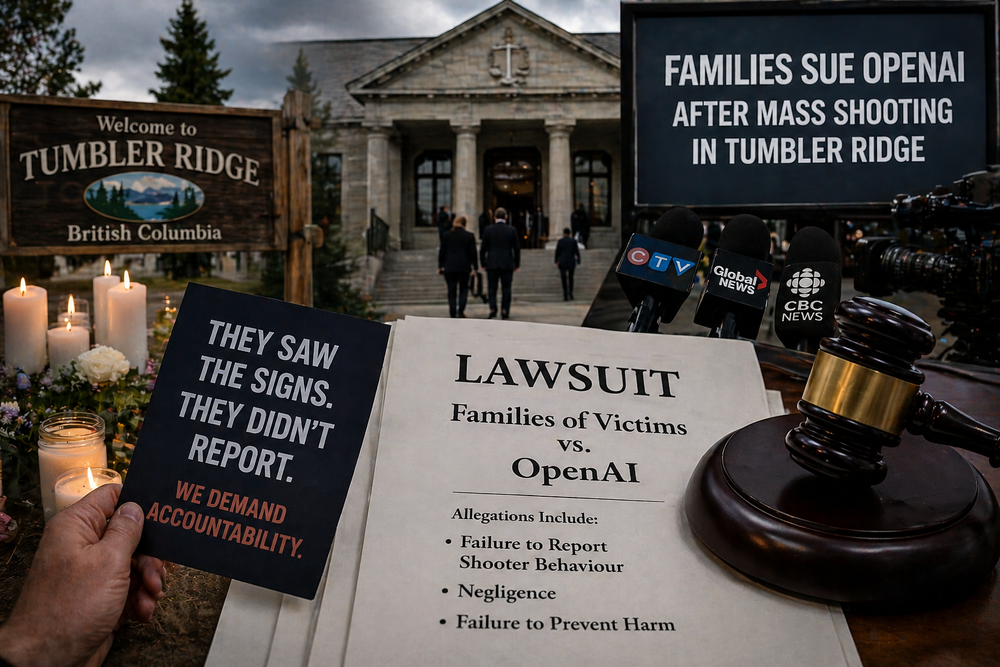
A quiet northern community is now at the center of a legal and ethical firestorm, and the implications could stretch far beyond British Columbia. Following a tragic mass shooting in Tumbler Ridge, several families of victims have launched a lawsuit against OpenAI, raising urgent questions about accountability in the age of artificial intelligence.

The lawsuit now includes a critical and controversial claim: that there was a failure to report concerning behaviour exhibited by the alleged shooter. Families argue that warning signs, potentially identified through interactions with AI systems, were not escalated or flagged to appropriate authorities. This allegation adds a new layer of complexity, shifting part of the legal focus toward whether AI platforms have a duty to report credible threats.

This is uncharted territory.

At its core, the legal action reflects growing global concern over how powerful AI systems are used—and whether companies behind them can or should be held liable for misuse. The families involved argue that safeguards, oversight, and risk mitigation should go further, especially when warning signs emerge that could point to real-world danger.

For Vancouver and communities across Canada, this case hits close to home.

Tumbler Ridge is a small, tight-knit town. Events like this ripple deeply, affecting not just families but entire communities. Vigils, support services, and ongoing investigations continue as residents process the aftermath of the tragedy.

But beyond the human impact lies a broader conversation, one that’s gaining momentum worldwide.

Who is responsible when technology is misused or when warning signs are missed?

AI companies, including OpenAI, have consistently stated that their tools are designed with strict safety protocols and are not intended to facilitate harm. However, critics argue that as capabilities expand, expectations around monitoring and intervention may also grow. The allegation of failing to report concerning behaviour could become a central issue in determining legal responsibility.

Legal experts suggest the case could set a precedent, not just in Canada, but internationally. If courts determine that AI developers have a duty to act on credible threats, it could reshape how these technologies are monitored, governed, and integrated into society.

For now, the situation remains complex and evolving.

Investigations into the incident itself are ongoing, and the legal process will likely take years to unfold. What’s clear, however, is that this case is about more than one tragedy; it’s about the intersection of innovation, responsibility, and public safety.

And as technology continues to advance, those conversations aren’t going away.

They’re only getting louder.

Debbie Balfour | Real Estate Investing Success Coach + Podcast Host
📍 Website: www.DebbieBalfour.com
📧 Email: Debbie@DebbieBalfour.com
🔗 LinkedIn: Debbie Balfour
▶️ YouTube Channel: youtube.com/@DebbieBalfour

Join the FREE Facebook Group: Real Estate Investor Success Hub

Download your FREE 7 Proven Ways To Invest In Real Estate Without Using Your Own Cash guide.

TAGS: #AI News #Canada News #AI Regulation #OpenAI #Legal News #Public Safety #Technology Ethics #Surrey City News #Debbie Balfour

Share this article
The link has been copied!