By Jenny Holly Hansen | Surrey City News | May 11, 2026
For most people, mosquitoes are simply an annoyance of summer. But in Fort Langley, residents still remember the overwhelming swarms that descended on the community in 2022 — a season many locals describe as unlike anything they had experienced before.
Now, members of the Fort Langley Community Association (FLCA) are advocating for new technology to help prevent another difficult mosquito season: drones. Unfortunately, provincial approval for drone-based mosquito control is still at least a year away.
Memories of a Difficult Summer
In 2022, unusually high Fraser River levels combined with repeated summer heat waves created ideal conditions for mosquito populations to explode. Mosquito eggs can remain dormant in soil for years, only hatching once submerged by water. Each time the river rose that summer, another wave of mosquitoes emerged.
“It was like a sprint to see who would be safe,” recalled one Fort Langley resident, describing the daily rush from house to car while trying to avoid being bitten.
Another long-time resident , who has lived in Fort Langley for more than two decades, said she had never seen mosquito activity that severe.
The impact extended beyond inconvenience. Residents spent more time indoors, outdoor activities were disrupted, and local businesses felt the effects as visitors and campers avoided the area after hearing reports about the swarms.
Exploring New Solutions
For years, Metro Vancouver has contracted Morrow BioScience to manage nuisance mosquito populations throughout the region, including areas near Langley.
The company uses a naturally occurring bacteria that targets mosquito larvae before they hatch, reducing populations without harming people, pets, or wildlife. Treatments are currently applied by hand and by helicopter along shorelines and flood-prone areas.
From environmental risks to unexpected disruptions, having the right business insurance matters — reach out today for a personalized quote tailored to your business.
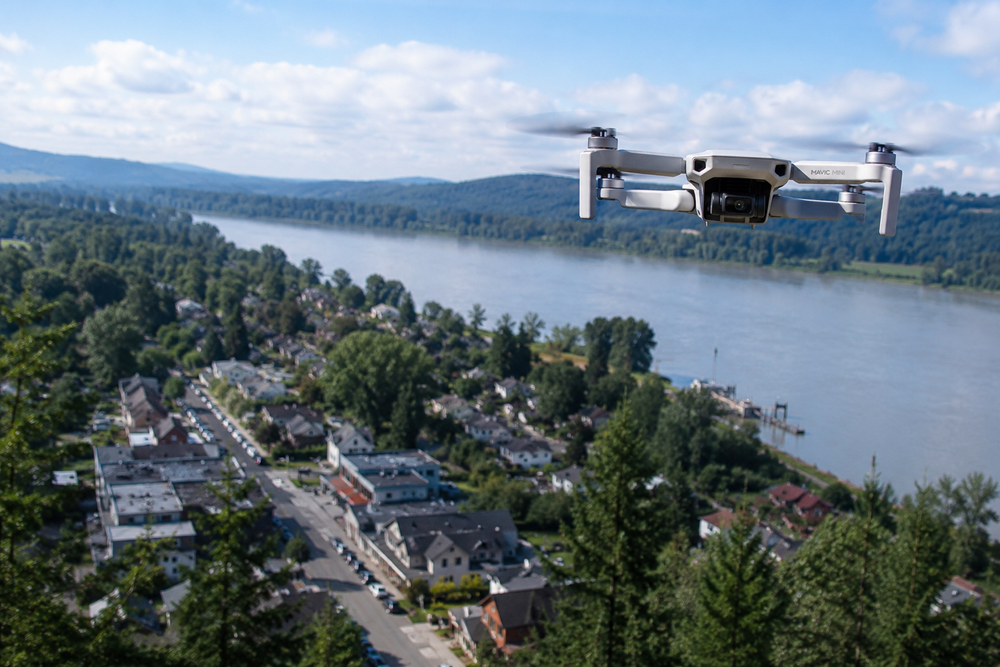
In recent years, however, drone technology has become increasingly common in agriculture and environmental management. Drones can access difficult terrain more efficiently and with greater precision, making them an appealing option for mosquito control in areas that are harder to reach.
Recognizing this potential, the FLCA approached the provincial government to advocate for the use of drones in local mosquito management programs. The association submitted a letter asking the province to expedite approval for drone-based pesticide application.
Province Says More Review Needed
The Ministry of Environment has confirmed that drone spraying will not be approved in time for the 2026 mosquito season.
According to the province, there are currently no appropriate certifications or operational frameworks in place for pesticide dispersal using drones under B.C.’s Integrated Pest Management Act.
In a statement, the ministry said it has begun a two-phase review process that includes technical assessments, policy analysis, certification reviews, and consultations with industry stakeholders.
“Until this policy and certification review is complete, using drones for pesticide application is not authorized, even if the federal pesticide label permits the use,” the ministry stated.
The first phase of the review is expected to conclude later this fall, while the second phase could take another year or more. That means drone-assisted mosquito control may not arrive before 2027 — and possibly later.
Looking Ahead
Despite the delay, Fort Langley residents and community advocates continue to push for innovative approaches that can help protect both quality of life and local businesses during peak mosquito season.
As climate patterns shift and seasonal flooding becomes less predictable, communities across the Fraser Valley may increasingly look toward new technologies to manage environmental challenges more effectively.
For Fort Langley, the hope is simple: fewer mosquitoes, more time outdoors, and a summer season residents and visitors can fully enjoy once again.
TAGS: #Jenny Holly Hansen #Protect Your Business #Community Impact #Langley Connect #Surrey Connect #Connect Network #Mosquitoes # Fort Langley Community Association (FLCA) #Morrow BioScience #B.C.'s Integrated Pest Management Act
Let’s Keep Talking: Jenny Holly Hansen, Business Insurance Broker since 2006. Phone: 604-317-6755 Email: jenny.hansen@brokerbc.ca LinkedIn https://www.linkedin.com/in/jenny-holly-hansen-365b691b/.